


Travelers are making a quieter but more decisive shift in how they choose where to stay. The question is no longer which hotel brand feels familiar, but whether a place actually supports how people travel today – how they move through a city, how they rest between activities, and how easily a stay fits into a real itinerary. That shift is already visible across the U.S., and by 2026 it is expected to reshape lodging preferences in a lasting way.
Large hotel chains were built for predictability and scale, not flexibility. As trips become shorter, more experience-driven, and less rigidly planned, those traditional strengths increasingly feel like limitations. Travelers now prioritize walkable locations, quieter environments, and hotels that adapt to mixed-use stays involving dining, events, work, and unstructured downtime. The gap between how people travel and how many hotels still operate continues to widen.
Kansas City boutique hotels offer a clear example of this change in motion. Instead of competing on size or standardization, these properties focus on livability, neighborhood connection, and thoughtful design. In a city where dining districts, cultural institutions, and event venues are closely clustered, boutique hotels are often better aligned with how visitors actually spend their time – moving between experiences rather than commuting between destinations.
This article explains why boutique hotels are gaining ground, what practical problems they solve that large chains continue to struggle with, and why Kansas City has emerged as an early indicator of this broader shift. For travelers planning around events, dining, or cultural weekends, understanding this change can be the difference between a stay that quietly supports the trip and one that unintentionally works against it.
What’s Driving the Shift Away from Big Hotel Chains
For decades, large hotel chains optimized for scale. That model worked when travelers prioritized predictability over experience. Today, the opposite is true.
Modern travelers increasingly value:
- Location over footprint
- Character over uniformity
- Flexibility over rigid service structures
Big chains are structurally built for throughput- large lobbies, standardized rooms, centralized systems. Boutique hotels, by contrast, are designed for context. They respond to neighborhood patterns, guest behavior, and local culture rather than enforcing a global template.
By 2026, this difference is no longer niche. It is becoming the default expectation.
What a Boutique Hotel Actually Solves
There’s persistent confusion about what defines a boutique hotel. It’s not price, luxury level, or age of the building.
A boutique hotel in Kansas City MO exists to solve a specific problem:
how to provide comfort, autonomy, and location relevance without operational friction.
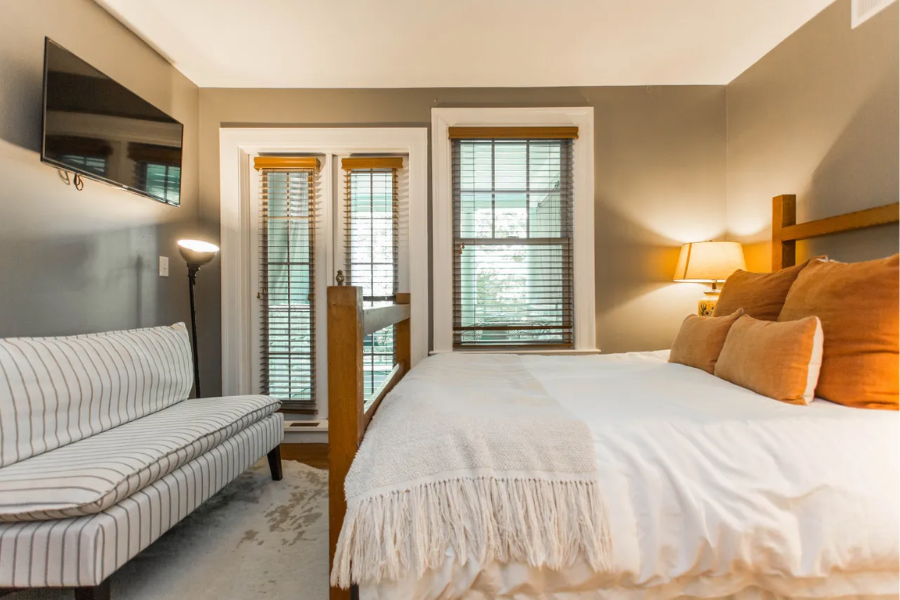
In practice, boutique hotels tend to:
- Operate at a smaller scale, reducing noise and congestion
- Sit within residential or mixed-use neighborhoods rather than commercial cores
- Design amenities around guest behavior, not volume efficiency
This makes them especially effective for event-driven travel, cultural weekends, and shorter stays where flexibility matters.
Why Kansas City Is Ahead of the Curve
Kansas City’s urban structure quietly favors boutique lodging in a way many larger cities do not. Its most visited districts – such as the Country Club Plaza, Crossroads Arts District, and nearby residential neighborhoods – are dense with culture but not overbuilt with high-rise hotels or convention-driven infrastructure. These areas are designed for movement, not containment, which changes what travelers actually need from where they stay.
Instead of forcing visitors into centralized hotel corridors, Kansas City distributes its experiences across walkable, character-rich zones. Dining, museums, galleries, live music venues, and seasonal events are close enough to connect naturally, but far enough apart that constant crowds are not inevitable. That balance rewards hotels that integrate into their surroundings rather than dominate them.
In this environment, Kansas City boutique hotels tend to outperform large chains on practical grounds. Properties that sit within neighborhoods – rather than above retail or nightlife hubs – allow guests to move fluidly between activities and return easily for rest or downtime. This matters more than it sounds, especially during multi-day trips built around art fairs, concerts, sporting events, or dining-focused weekends.
What ultimately sets Kansas City apart is that boutique hotels here are not positioning themselves as alternatives to big chains – they are simply aligned with how the city works. The layout favors calm over congestion, proximity over spectacle, and usability over scale. As travel preferences continue to shift toward experience-driven stays, Kansas City’s structure has already created conditions where boutique lodging feels like the default, not the exception.
Where Big Chains Struggle and Why It Matters
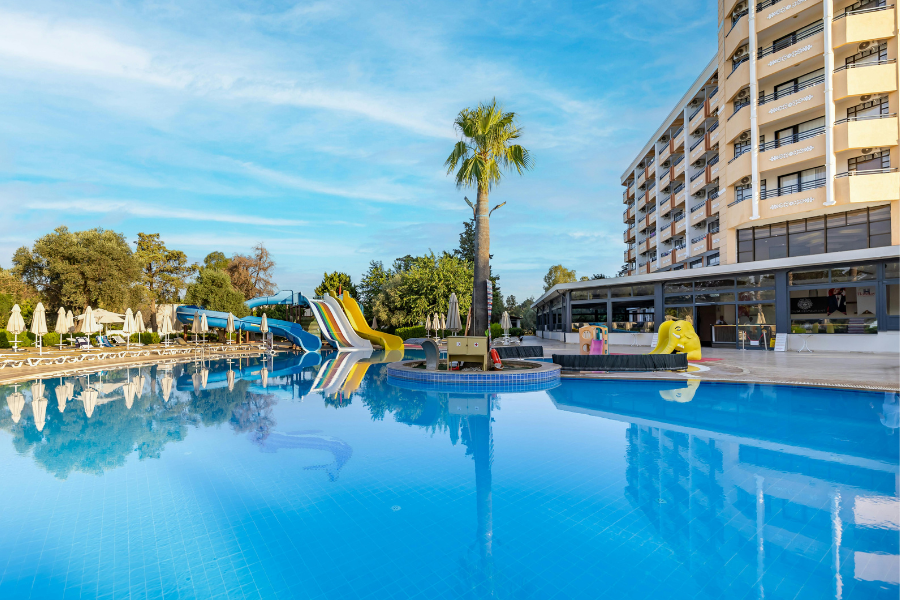
Large hotel brands still perform well for conferences and airport overnights. But for experiential travel, their weaknesses are becoming more visible.
Common friction points include:
- Noise from high-volume guest turnover
- Limited flexibility around arrivals, departures, and shared spaces
- Locations optimized for traffic flow, not walkability
These issues don’t always show up in marketing copy- but they surface quickly during event weekends, dining-focused trips, or multi-stop itineraries.
Boutique Hotels and Event-Based Travel
Event-driven travel exposes the gap between scale and suitability faster than any other use case.
During concerts, art fairs, and seasonal weekends, travelers staying at boutique properties often benefit from:
- Easier re-entry throughout the day
- Quieter evenings despite nearby activity
- Less dependency on rideshares or parking logistics
This is one reason Kansas City’s boutique segment continues to outperform expectations during peak cultural weekends.
What Travelers Actually Expect by 2026
Looking ahead, the expectations shaping hotel decisions are already visible:
- Guests want hotels that support how they move, not just where they sleep
- They value places that feel grounded in a location rather than interchangeable
- They expect fewer rules and more self-directed experiences
Boutique hotels are structurally better equipped to meet these expectations. Big chains can adapt- but doing so requires undoing decades of scale-driven design.
Is a Boutique Hotel Right for You?
Choosing between a boutique hotel and a large chain is less about preference and more about alignment. The right option depends on how your trip is structured and what role the hotel plays in your overall experience.
A boutique hotel is typically the better choice when the stay itself is part of the trip, not just a place to sleep. This is especially true if:
- Your itinerary revolves around dining, cultural attractions, shopping districts, or ticketed events rather than fixed schedules
- Walkability matters, and you want to move easily between your hotel and nearby restaurants, museums, or venues without relying on constant transportation
- You value quieter environments, smaller guest counts, and spaces that feel residential rather than transactional
- You expect flexibility – being able to return to your room during the day, adjust plans spontaneously, or use shared spaces without crowds
In these scenarios, boutique hotels tend to reduce friction. They integrate more naturally into the surrounding neighborhood and support a slower, more adaptable rhythm of travel.
Large chain hotels can still make sense in specific contexts, particularly when consistency is the primary requirement. A chain may be the better fit if:
- Your stay is centered on conferences, conventions, or on-site business facilities
- You prioritize standardized room layouts, predictable services, or loyalty program benefits across multiple cities
- The hotel functions mainly as a logistical base, with most of your time spent elsewhere
- Location convenience outweighs atmosphere, walkability, or character
Neither option is universally better. The key decision factor is how you plan to use the hotel during your stay. When lodging is treated as part of the experience – supporting movement, rest, and daily flow – boutique hotels often deliver a more balanced and satisfying outcome. When uniformity and scale matter more than context, larger chains may still serve their purpose.
Understanding this distinction upfront leads to fewer compromises and a stay that works with your plans instead of against them.
FAQs
Why are boutique hotels growing faster than big chains?
Because they adapt more quickly to traveler behavior, location-specific needs, and demand for flexibility rather than scale.
Are boutique hotels more expensive?
Not necessarily. Pricing often reflects location and demand rather than size, and many boutique hotels compete directly with mid-range chain pricing.
Why do Kansas City boutique hotels perform well during events?
Their locations and scale reduce congestion, noise, and logistical friction during high-traffic weekends.
Is a boutique hotel suitable for short stays?
Yes. Short stays benefit most from walkability, calm environments, and easy access to dining and attractions.
What This Means for Kansas City Travel Going Forward
The rise of boutique hotels isn’t a trend- it’s a correction. Travelers are choosing lodging that supports how they experience a city, not just where they check in.
Kansas City is ahead of this curve because its neighborhoods reward hotels that integrate rather than dominate. Properties like Southmoreland show how boutique hotels meet modern expectations quietly, effectively, and without excess.
By 2026, the question won’t be whether boutique hotels can compete with big chains. It will be why travelers waited so long to choose them in the first place.